Persea americana
butter pear
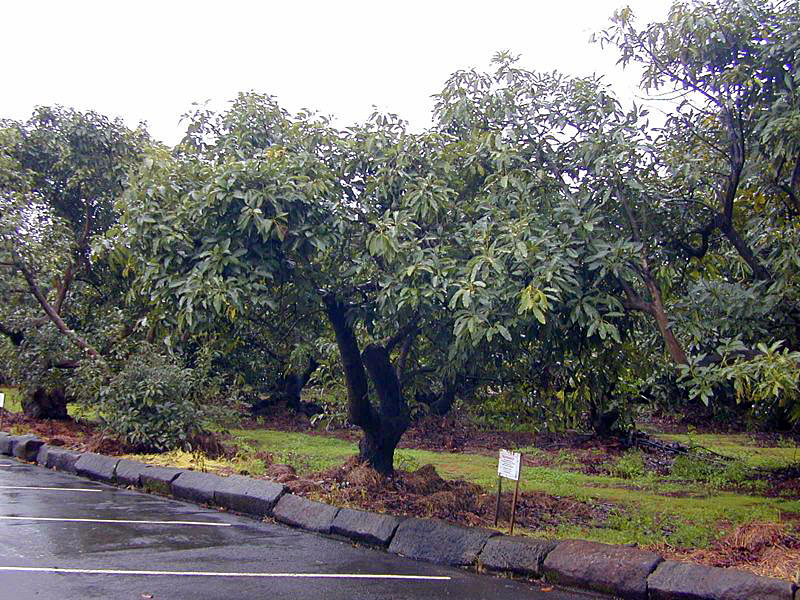
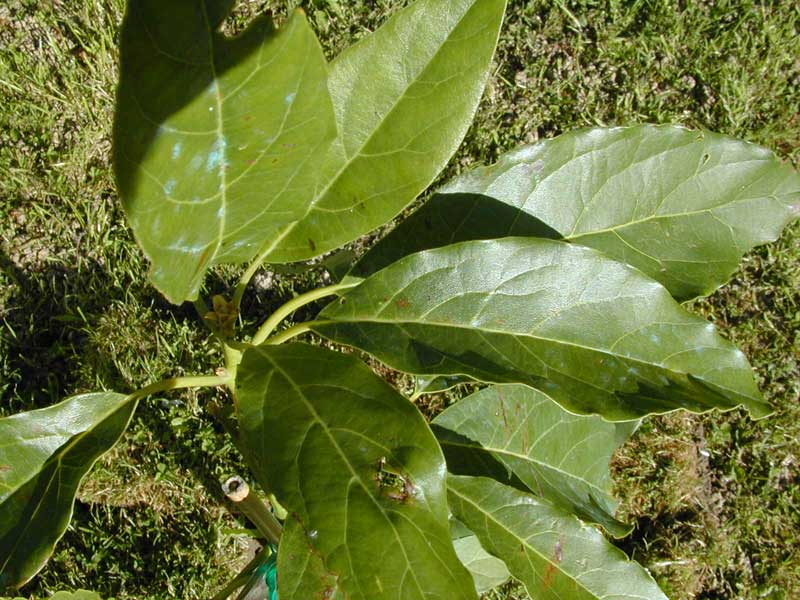
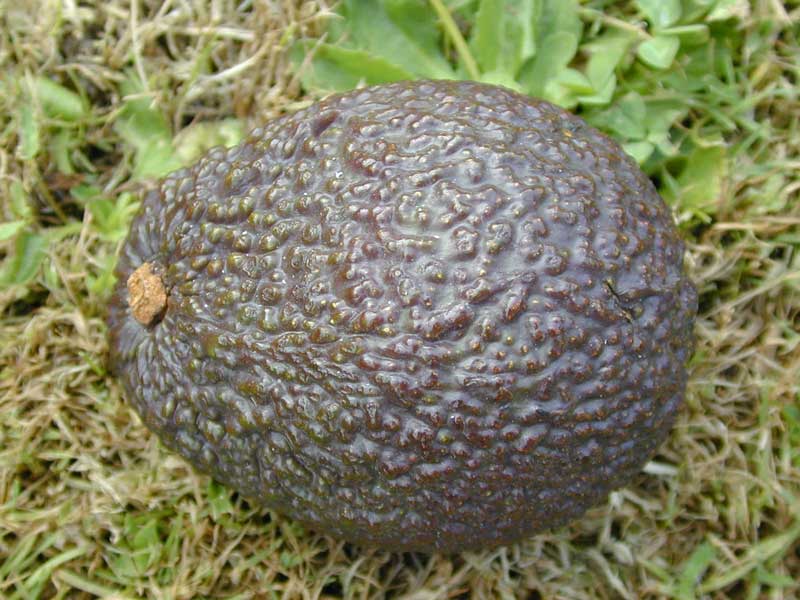
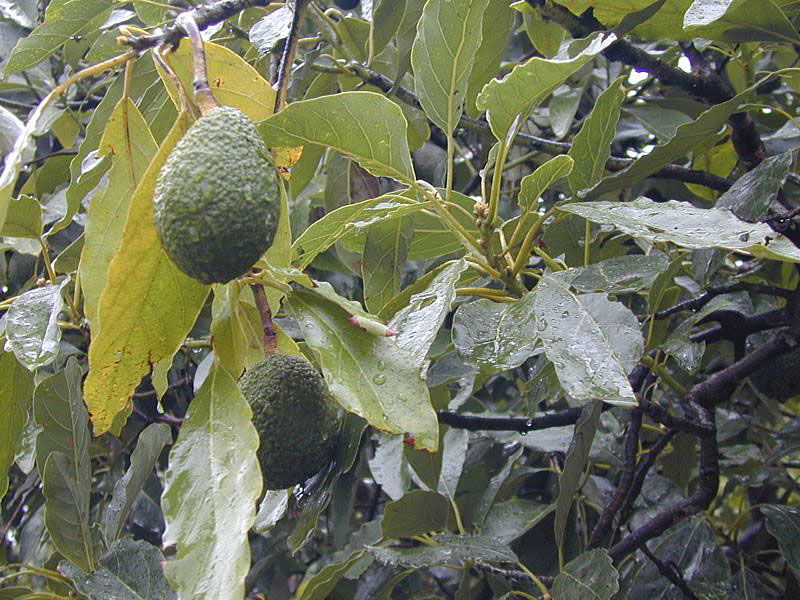
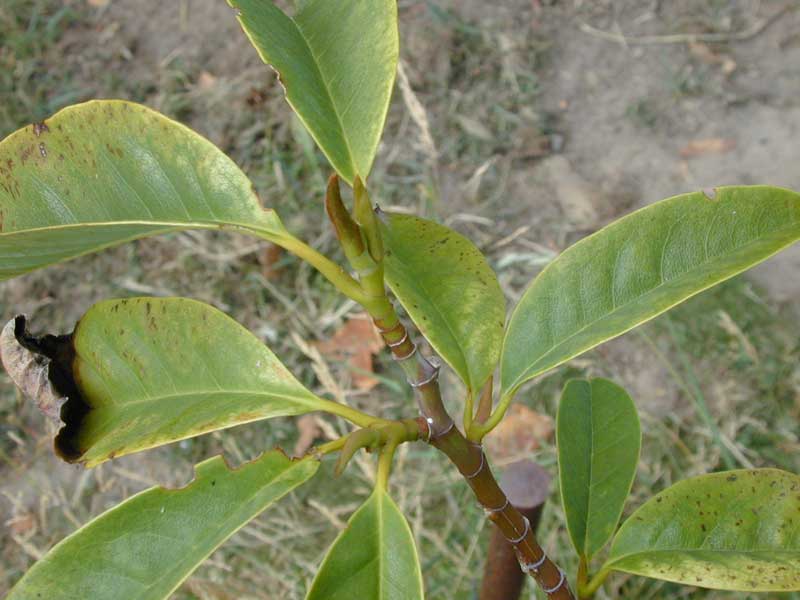
There are 3 main cultivars; West Indian, Guatemalan and Mexican. A hybrid of Mexican and Guatemalan called "Hass" is a popular commercial tree. The fruit is a large fleshy berry, pear shaped or globose, 7 - 20cm long. The skin of the ripe fruit may be green, yellowish, maroon or purple. The fruit has a large single seed in the center of a green edible mesocarp.
Michelia species, grown in gardens for their scented flowers, are small trees with similar leaves. They usually have long velvety buds, as well as large white, fragrant flowers. Toxicity unknown.
Avocado are grown commercially, particularly in the Bay of Plenty, as well as in private gardens and orchards.
Unknown but apparently cardiotoxic. Grazing animals and pets may be poisoned by ingesting the leaves, fruit, bark or seeds. Fish have been poisoned by leaves falling into their water. Not all varieties of avocado have the same toxicity. Guatemalan avocado is toxic while the Mexican variety is not known to cause poisoning. Crosses are toxic.
Most NZ reports are in horses, but poisoning has also been reported in dogs, cattle, goats, birds and fish.
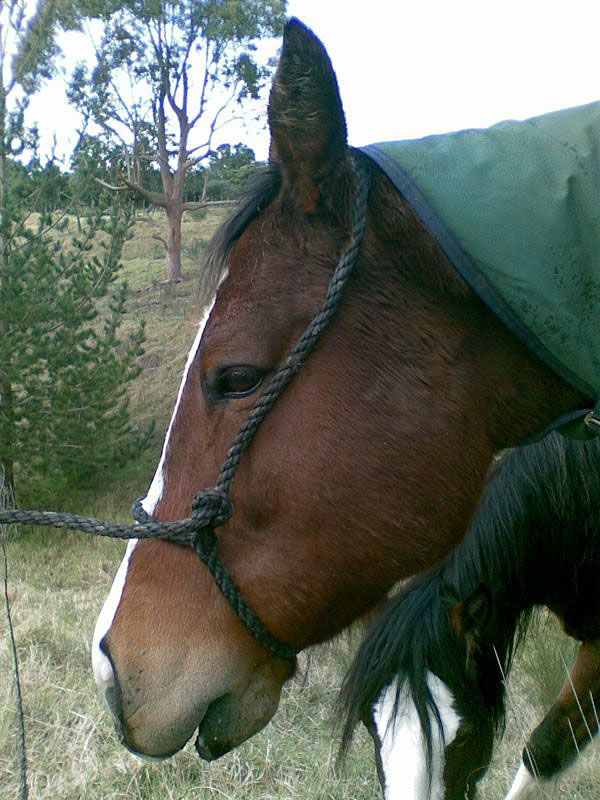
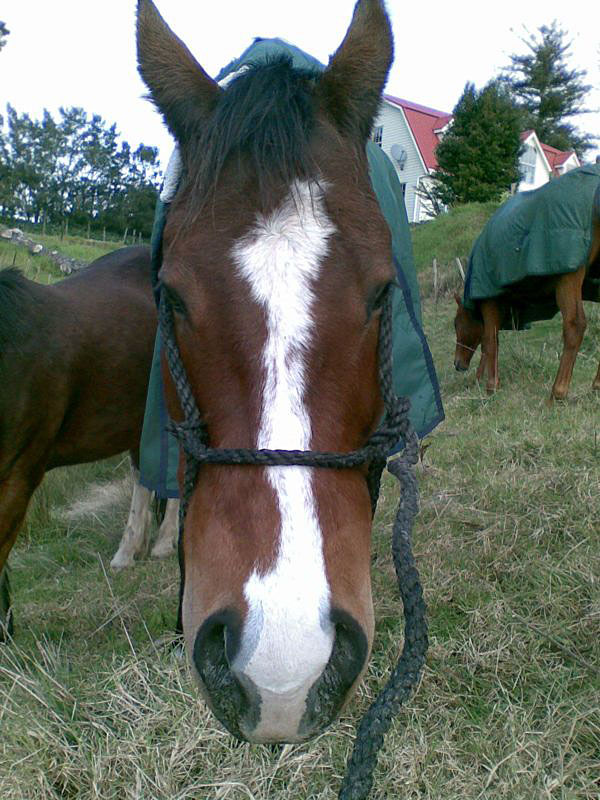
Horses mild abdominal pain (enteritis ) and swollen ventral abdomen. They may be sensitive to touch over the back, flank and rump. In severe cases, dyspnoea and oedema of the head and pharnyx may occur. There may be dull heart sounds and fluid rales in the thorax. Noninfectious mastitis has been reported. Myonecrosis with swelling and atrophy of the masseter muscles and tongue protrusion and inability to swallow have occurred. Clinical pathology tests performed 3 days after treatment 4 fold increase in CPK, and a 2 fold increase in total bilirubin. AST increased 3 to 10 fold on days 5 and 12, respectively.
Rabbits pulmonary congestion, noninfectious mastitis and death.Sheep heart failure.
Caged Birds within 24 hours of exposure birds show respiratory distress. Death may follow in 1 - 2 days. Congestion, hydropericardium and anasarca are lesions found in poisoned birds.
Cattle a noninfectious mastitis has been associated with toxicity. Over-ripe avocados infected with Diplodia species which causes black spots on avocados have been associated with tremors in cattle.
Dairy Goats a noninfectious mastitis with elevated somatic cells counts and decreased milk production have been reported. Rapid death, oedema of the neck and brisket, depression, teeth grinding and elevated liver enzymes (SGOT, LDH) may be seen.
Dog: Reported findings include anasarca involving the hind limbs, ascites, pulmonary oedema and pleural and pericardial effusions. The heart changes include flabby muscle, especially the right heart and pale muscle. Congestion of the liver and kidney has been reported. Histological changes include myocardial degeneration with mononuclear cell infiltration. The kidney and liver had mononuclear cell infiltration.
Sheep: Myocardial degenerative foci have been found in sheep that ingested avocado.
Caged Birds: Congestion, hydropericardium and anasarca are lesions found in poisoned birds.
Goats: Findings include oedema of the head and neck, hydrothorax with pulmonary oedema, pleural and pericardial effusion. Heart muscle has been reported to be slightly pale and flabby. Ascites, liver congestion with the gall bladder wall and ligaments thickened and oedematous have been reported. Histological lesions include hyperaemic lungs, alveoli contain oedematous fluid, myocardial degeneration with eosinophilia, loss of striation of muscle fibers, pyknosis of nuclei and marked interstitial oedema.
A history of ingestion of avocado fruit, seeds and or leaves; clinical signs and post mortem lesions consistent with avocado toxicity.
Horses In horses with clinical signs of dyspnoea and oedema of the head and pharynx, difficulty breathing and fluid rales, symptomatic treatment with tripelennamine hydrochloride (1 mg/kg IM) and frusemide and flunixin (1.4 mg/kg IV), repeated as necessary has been suggested. Less severely affected horses have been treated with dexamethasone at 0.025 mg/kg. Other species treat symptomatically.
The prognosis is good but complete resolution may take up to 2 - 3 weeks.
Beasley V.R. (1997). A Systems Affected Approach to Veterinary Toxicology. University of Illinois Press.
Bender G. (1997) Toxicity of avocado leaves to animals Subtropical Fruit News, December
Craig AL, Eide RN.et al. (1984). Toxicity of avocado (Persea americana[Guatemalan var.]) leaves: review and preliminary report. Vet Hum Toxicol 26(5):381 383.
Craigmill A.L., Seawright A.A., Mattila T. and Frost A.J. (1989) Pathological changes in the mammary gland and biochemical changes in the milk of goats following oral dosing with leaf of the avocado (Persea americana) Australian Veterinary Journal, 66, 206 211
Grant R, Basson PA, Booker HH, et al. (1991) Cardiomyopthy caused by avocado (Persea americana Mill.) leaves. J South African Vet Assoc 62:21-22.
Harris AM, Stauber E, Casteel S. Eitner D. (1989). Avocado (Persea americana) intoxication in caged birds. JAVMA 194:64 66.
McKenzie, R.A. and Brown, O.P. (1991). Avocado (Persea americana) poisoning of horses. Australian Veterinary Journal. 68:77 88.
Sani Y. Atwell RB and Seawright AA. (1991). The cardiotoxicity of avocado leaves. Australian Vet J 68(4):150 151.
Shropshire CM, Stauber E, Arai M. (1992) Evaluation of selected plants for acute toxicosis in budgerigars. J Am Vet Med Assoc. 200(12):1780.
Surveillance (1991) 18 (4):33 Avocado poisoning in horses
Surveillance (1996) 23 (1):18 Avocado poisoning in horses
Surveillance (2002) 29 (4) 22 Avocado poisoning in horses
Surveillance (2008) 35 (4) 12 Avocado toxicity in horses
Thompson J. and Jansen M. (2001) Avocado toxicity in donkeys. Vetscript, November, 10 11