Beta vulgaris
mangels, fodder beet, sugar beet.
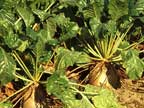
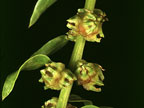
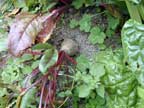
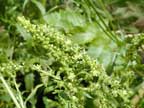
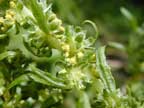
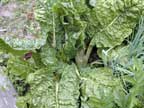
Roots are a thick bulb of various colours (in most varieties except silverbeet). Leaves are large, glabrous and entire or sinuate. Flowers are small and green on flower spike, seeds are contained in a corky capsule.
Beetroot and silverbeet are different varieties of the same species grown on a small scale.
Grown as a field crop and in gardens in both islands.
Nitrates may accumulate in the roots of mangels. Rumen microflora may convert the nitrates to nitrites. Nitrites reduce haemoglobin to methaemoglobin. Oxalate levels may be high in the leaves of mangel fodder and sugar beets. Oestrogens may be high in sugar beet leaves especially in autumn. Mangel poisoning is not that common in NZ. Cases have occurred due to the undercooking of mangels converting the nitrates to nitrites. Boiling for two hours renders them non toxic.
Cows have been poisoned by fresh mangels. Sugar and fodder beet leaves have been known to cause nitrite poisoning in sheep and cattle in New Zealand. Dry periods followed by rain increase the likelihood of toxicity.
Dullness, staggering gait, diarrhoea, polydipsia. Sometimes bloat or spasms of the alimentary tract. Pigs die quickly with muscular weakness, laboured respiration, convulsions and death from asphyxiation. When nitrite is ingested preformed, the effects are rapid. When conversion of nitrate to nitrite occurs in the rumen there is a delay of a few hours before clinical signs are apparent. In cattle maximum methaemoglobinaemia usually occurs about 5 hours after high levels of nitrate begin to accumulate. In acute poisoning there may be sudden death without affected animals showing any clinical signs. Death usually occurs within 12 - 24 hours of ingestion of the toxic plants. Pregnant animals may abort their foetuses. There are three main syndromes: Gastrointestinal disturbances salivation abdominal pain diarrhoea (irritant effect of NO3 ) vomiting (even in ruminants) Oxygen deprivation increased respiratory rate and heart rate, dyspnoea, gasping, cyanosis (mucous membranes brown pale) Cerebral anoxia Ataxia muscle tremor weakness, incoordination (cattle in particular are very reluctant to move) convulsions.
Mucous membranes cyanotic, dilatation of mesenteric veins, liver and kidneys bright red in colour, stomach and small intestine inflamed, lungs red with venous congestion, possibly brown blood due to methaemoglobin from nitrates/nitrite poisoning. In nitrate poisoning the only specific feature shortly after death is the brown or coffee coloured blood that has a watery appearance. After death there is a gradual return of the colour of the blood from brown to red due to the formation of the reddish pigment nitric oxide haemoglobin and also the reduction of methaemoglobin back to oxyhaemoglobin, so that the absence of brown blood at post mortem does not exclude a diagnosis of nitrate/ nitrite poisoning. Further, the blood from a methaemoglobinaemic animal may contain little or no methaemoglobin by the time it reaches the laboratory due to reduction to oxyhaemoglobin.
For nitrite toxicity: Brown blood (not always present) Diphenylamine test on aqueous humour, tissue or stomach material. Diphenylamine field test to check plant material. Collect plant material, seal in airtight container, chill and send to laboratory for nitrate analysis. Dry plant material for other analyses.
Nitrate poisoning from other pasture grasses, crops and weeds. Maize, fescue, lucerne, clover, dock and various other pasture species. Nitrogenous fertilizers, nitrates in water. Methaemoglobin can be caused by paracetamol, copper toxicosis and pine oil. Many toxic agents can present with similar neurological signs.
Cattle: minimise stress, methylene blue 1 - 2 (-20) mg/kg of 1% solution slow iv. If not too ill move to safer grazing. Feed hay or safe feed.
Dependent on dose and toxicity. Young are more susceptible then adults.
Recognise environmental factors that cause toxic nitrate levels in plants and crops and test before allowing livestock access. Feed hay or break feed to reduce consumption.
Connor, HE, The Poisonous plants in New Zealand, 2nd ed.,1977, Government Publications Ltd., Wellington
The Merck Veterinary Manual, 8th ed, 1998, Merck and Co., New Jersey
Upritchard, E.A., A Guide to the Identification of New Zealand Common Weeds in Colour