Lycium ferocissimum
African boxthorn
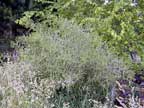
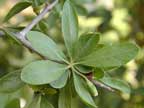
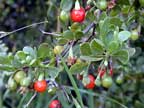
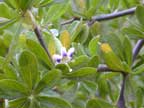
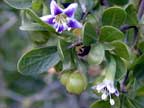
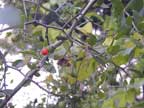
Erect densely and stoutly branched very spiny shrub to 5m tall. Small spathulate oblong, subsessile leaves in clusters. Small whitish to lilac flowers with slender corolla tube. Bright orange red berries (approx 1cm).
none
Often found wild on coastlines of both islands, common farm hedge plants, especially in Taranaki. A noxious weed in many places.
Found in berries and possibly leaves. Glycosidic steroidal alkaloids such as solanine, solamargine, solasonine and soladulcidine tetraoside.
All species including cattle, sheep, poultry, pigs and humans, although most animals will avoid the bush because of the thorns.
Ingestion of the plant may lead to irritation of mucous membranes, excessive salivation and profuse diarrhoea with abdominal pain. A transient haemoglobinuria may be seen due to the saponin like action of the aldaloids. The compounds are extremely depressant to the CNS and have a glycoside like action on the heart. Animals pass into a state of deep depression with diminished pain sensitivity and an inhibited response to conditioned reflexes. Death appears to be cause by depression of the CNS followed by respiratory and heart failure. Piercing of the skin with a thorn will lead to a sharp stinging pain in the area and local redness and swelling of the area, sometimes progressing to marked stiffness of the limb involved.
Hyperaemia of the alimentary tract, often with severe haemorrhage, together with a generalised congestion of the visceral organs.
History and clinical signs.
Not usually necessary.
Usually most of the toxic plant material is excreted within 24 hours and spontaneous recovery occurs.
Connor, HE, The Poisonous plants in New Zealand, 2nd ed.,1977, Government Publications Ltd., Wellington
Parton K, Bruere A.N. and Chambers J.P. Veterinary Clinical Toxicology, 3rd ed. 2006. Veterinary Continuing Education Publication No. 249