Brassica oleracea, B. rapa, B. napus, B. nigra
kale, rape (canola), turnips, swedes, mustard, choumoellier
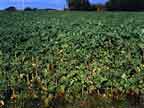
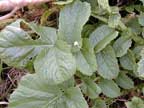
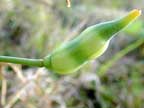
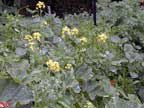
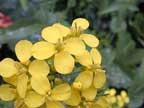
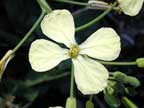
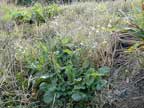
Kale is a perennial plant, usually grown as an annual crop, up to 1m or more tall; branches long, erect or patent; lower leaves petioled, green, sometimes with a whitish bloom, ovate to obovate, variously lobed with toothed, scalloped or frilled edges, lyrate pinnatisect, with 1 - 2 lobes or leaflets on each side and a larger sparsely setose, terminal lobe; upper leaves subentire, short petioled, 30 - 60 mm long, 2 - 3.5 mm wide, constricted at intervals, sessile, attenuate into a tapering, seedless, short beak 5 - 10 mm long. Rooting depth 90 - 120 cm. Flowers yellow (or white), 4 petals, sometimes scented. Other brassicas are similar (see below).
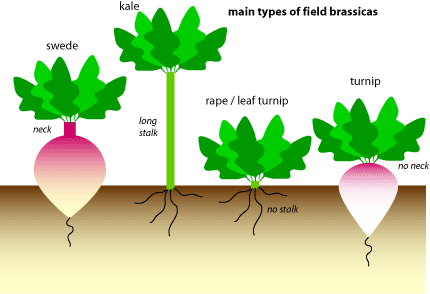
(After Stewart and Charlton, 2003)
There are four species which include a range of different forms likely to be grown on a field scale. B. oleracea includes cabbage, Brussel sprouts, kale, broccoli, cauliflower and kohlrabi. B. rapa includes turnips, Chinese cabbage and pak choi. B. napus, which may have originally been a hybrid between the other two, includes swedes and oil seed rape. B. nigra is black mustard. Radishes are closely related.
There are five main forms grown for forage:
swedes are grown in cooler parts of NZ, mainly for their roots
kale used to be mainly a cold weather winter feed, as it is frost resistant, but is starting to be used as a summer feed as well as it is also drought resistant. Traditional cultivars are tall with thick stalks, modern ones tend to be shorter.
rape has traditionally been used as a summer finishing crop, but new cultivars are extending its range. It may also be grown for its seeds to obtain oil. (Canola ia a cultivar of oil seed rape which produces oil low in undesirable fatty acids.)
leaf turnips look similar but are really turnips crossed with Chinese cabbage. They regrow readily after grazing and are usually used for high quality summer / autumn grazing.
turnips are usually grown for their bulbs, especially for summer drought periods.
Poisoning depends more on grazing management than the type of brassica.
Kale used to be grown mainly in the southern areas of the South Island, but now different forms of brassica are grown for different purposes everywhere in NZ.
Stalks and roots have a large capacity to concentrate nitrates, so nitrate toxicity can be important. S-methylcysteine sulphoxide is found in all brassicas and in onions, but is especially high in kale starting to flower in spring. It is responsible for kale anaemia. Rape has an unknown photodynamic agent that causes photosensitisation. All brassicas also contain a variety of glucosinolates which block the production of thyroid hormone and can cause goitre. The high levels of sulphur in brassicas can give rise to signs of copper or selenium deficiency, or cause direct problems such as polioencephalomalacia. Brassicas fed without supplementation can lead to various mineral deficiencies.
Grazing animals, or their foetuses in utero.
There are several different syndomes:
Nitrate toxicity: Hypoxia Slow Capillary refill time due to low blood pressure Rapid, weak heartbeat Hypothermia Muscle tremours Ataxia Brown, cynotic mucous membranes Dyspnoea, tachypnoea and polyuria are frequently seen also. Sudden death also occurs in acute intoxications.
Kale anaemia is often reported in NZ. Haemoglobinuria is the most constant sign, but weakness and inappetence may also occur. This only occurs in ruminants, usually after 1 - 3 weeks on brassicas.
Rape scald: in addition to marked oedema of the ears and face, rape may cause scalding on the lower limbs and extremeties.
Frost bloat can occur in animals fed frosted brassicas, probably because the cell walls are already broken down and fermentation is faster.
Mechanical problems, such as broken teeth and choking on bulbs can occur in animals fed swedes or turnips.
Horses (and people) can be allergic to oil seed rape pollen. Forage rape is not usually allowed to flower.
More chronic exposure is characterised by abortion, ill thrift, infertility and goitre. Wintering ewes on kale can lead to severe goitre in lambs, and an above average mortality rate in ewes. Most outbreaks of goitre, often associated with a high lamb death rate occur in Canterbury, Otago, and Southland. The critical grazing period for foetal goitre in pregnant ewes appears to be during the fourth month of gestation.
Subclinical nitrate poisoning can also interfere with thyroid function.
Reduced fertility has been suspected but not proven to be associated with brassicas.
Chickens fed rapeseed meal may develop liver haemorrhage.
Nitrate toxicity: jaundice, dark brown kidney, haematuria. chocolate brown blood, petechial ecchymotic haemorrhages on serosal surfaces. If necropsy is postponed too long the brown blood discolouration may disappear as methaemoglobin is converted back to haemoglobin.
Kale anaemia: anaemic carcass with dark red kidney and bladder full of port wine coloured urine.
Goitre: dystocia in ewes or cows associated with lambs or calves born with goitre.
Rape scald: lamb in good body condition with serosanguinous fluid in the thoracic cavity. The lungs were congested and oedematous with foam in the trachea. Histologically the lungs and kidneys were congested. Areas of emphysema were seen throughout the lung. The gastrointestinal tract showed congestion of the lamina propria of the ileal mucosa with diffuse haemorrhage in the superficial mucosa. Cattle have similar postmortem changes.
History, clinical signs, postmortem.
Poisonings by chlorate, cyanide, ureae, pesticides, carbon monoxide poisoning, aminophenols or aniline dyes. Drugs including sulphonamides, phenacetin and paracetamol. Infectious diseases causing sudden deaths. Non infectious disease including grain overload, hypocalcemia, hypomagnesemia, pulmonary adenomatosis or emphysema. Other pasture plants causing nitrate toxicity Maize, fescue, luceme, clover, dock and various other pasture species. Nitrogenous fertilizers, Nitrates in water. Methaemoglobin can be caused by paracetamol, copper toxicosis and pine oil.
Nitrate toxicity: Minimise excitement and stock movement. Animals not exhibiting clinical signs should be moved. Cattle exhibiting severe clinical signs should immediately be treated with methylene blue at 1-2 (-20) mg/kg in a 1% solution slowly iv. Lower doses repeated in 20 - 30min if initial response minimal. Feed safe hay or feed to increase carbohydrate availability.
Kale anaemia: remove from brassica and feed something else.
Rape scald: move into shade and feed something else.
Prognosis for animals with signs of nitrate/nitrate toxicity is poor. Animals suffering rape scald usually recover soon after taken off crop. If animals suffering from kale anaemia already have severe haemoturia, prognosis is poor; with mild anaesmia, they should recover after 3 - 4 weeks off brassicas.
Brassicas should ideally only be fed as part of the diet. It has been calculated that the optimum proportion of turnips for a dairy cow is 21%DM. Ration feeding of all cabbage crops, preferably with a grass runoff, is best. Animals should be introduced to these crops gradually, and preferably with full stomachs.
Use of sulphur fertiliser should be minimised to reduce SMCO concentrations.
Allworth MB, West DM, Bruere AN Ovine dermatophilosis in young sheep associated with the grazing of Brassica spp. crops. New Zealand Veterinary Journal 33(12), 210-212, 1985
Clarke, EGC, Clarke ML. Poisonous plants: Cruciferae. In : clarke EGC, Clarke ML (eds). Garner’s Veterinary Toxicology. Pp326 30. Bailliere Tindall & Cassell. London 1967.
Garner GB Nitrate - A factor in animal health. Proceedings of the New Zealand Society of Animal Production 23, 28-38, 1963
Hill FI , Ebbett PC Polioencephalomalacia in cattle in New Zealand fed chou moellier (Brassica oleracea) New Zealand Veterinary Journal 45(1), 37-39, 1997
Martinovich D , Woodhouse DA Post-parturient haemoglobinuria in cattle: a Heinz body haemolytic anaemia New Zealand Veterinary Journal 19(11), 259-263, 1971
Mayer S, Poison brassicas. In Practice, 12, 216 - 217, 1991
McFerran R , Singh V , Parker WJ , Morris ST Incorporating turnips into the pasture diet of lactating dairy cows. Proceedings of the New Zealand Society of Animal Production 57(), 161-164, 1997
Parton K, Bruere A.N. and Chambers J.P. Veterinary Clinical Toxicology, 3rd ed. 2006. Veterinary Continuing Education Publication No. 249
Stewart, A and Charlton D. Pasture and forage plants for New Zealand. 2nd ed.Grasslands Research and Practice Series No. 8, New Zealand Grassland Association, 2003
Surveillance, Turnip photosensitisation, 33 (2) 27 2006
Surveillance, Photosensitivity from turnip ingestion, 35 (2) 32 & 33, 2008
Surveillance, Nitrate poisoning from turnips. 36 (2) 31, 2009
Surveillance, SMCO toxicity, 35 (4) 14, 2008
Thompson KG , Cook TG Rickets in yearling steers wintered on a swede (Brassica napus) crop. New Zealand Veterinary Journal 35(1-2), 11-13, 1987
Vermunt JJ , West DM , Cooke MM Rape poisoning in sheep. New Zealand Veterinary Journal 41(3), 151-152, 1993