Melianthus major
Honey flower, touch me not, false castor oil plant
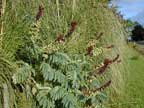
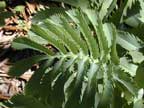
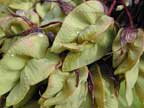
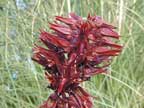
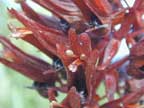
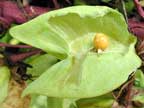
Smelly soft wooded suckering shrub up to 2m tall or more. Large divided serrated leaves, strong smelling when crushed. Dark reddish brown flowers and papery swollen seed capsules on erect stem. Seeds are shining black when ripe.
None
Cultivated in gardens, and a garden escape on roadsides and waste places, more common in North Island.
Unidentified, possibly a saponin. Toxicity is not lost on drying.
Horses, ruminants
Distress, profuse urination, labored breathing, salivation, colic, bloody diarrhoea. Can also exert CNS effects causing stupefaction and paralysis.
Pronounced general cyanosis, marked hyperaemia, slight oedema of lungs, numerous haemorrhages in mucosa of abomasum, and acute catarrhal enteritis, haemorrhagic swelling of the lymph glands, and hyperaemia of the liver.
History. Haemolytic anaemia and exudative diathesis.
Other saponin containing plants such as pokeweed. Also the many other causes of enteritis.
Symptomatic fluids, electrolytes, gastric protectants.
Rarely fatal with good recovery if removed from source.
Do not allowed hungry livestock to graze areas where plants are growing.
Connor, HE, The Poisonous plants in New Zealand, 2nd ed.,1977, Government Publications Ltd., Wellington
Parton K, Bruere A.N. and Chambers J.P. Veterinary Clinical Toxicology, 3rd ed. 2006. Veterinary Continuing Education Publication No. 249