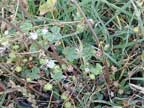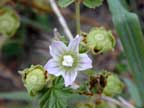
Malva neglecta
small flowered mallow
Biennial or annual herb with stems prostate . Single tap root. Leaves have 7 subacute lobes, soft and velvety (both sides) and blades divided to above the middle with 5 7 veins. Flowers are white, pink or blue / violet with 5 petals, in small fasicles, with short peduncles, sepals broadly ovate, hairy. The fruit is spherical, wrinkled on backs and margins toothed.
Other mallows.
Common to locally abundant in waste places and occasionally found in cultivated land in both the North Island and South Island.
Not known. This plant has been tested positive for nitrate but nitrates are not likely to be responsible for the 'staggers' syndrome. Animals are not affected unless fresh Malva constitutes a large part of the available herbage eaten over several days.
Sheep, cattle, horses. Lambs at foot may be poisoned by milk of the ewe. No poisoning is known to have occurred in New Zealand but it is reported in Australia.
Ingestion results in a nervous syndrome characterised by severe muscular trembling, but animals may not show symptoms unless they are driven.?Sheep: Stiff abnormal gait, paresis, hind limb incoordination, frequent urination, arched back, and heads stretched forward, trembling or shivering, particularly of the hindquarters and shoulders. Sheep may stand with a shallow rapid breathing and rapid pulse. Finally the animals go down; if forced to move they may die. Horses: Signs similar to those in sheep occur in horses but there is also perfuse sweating and increased respiratory rate, lack of muscular coordination followed by staggering and quivering of the muscles.
No reports of post mortem examinations or pathology have been noted in the literature. If nitrates are the cause then the clinical postmortem findings would be the same for other nitrate poisonings.
History of eating large quantities of small flowered mallow over a period of several days, clinical signs possibly brown coloured blood (if nitrates suspected).
Nitrate poisoning by other nitrate containing plants. Poisoning by; cyanide, urea, pesticides, toxic gases (CO, Hydrogen sulphide), chlorates, aniline dyes, aminophenols. Drugs sulphonamides, phenacetin, paracetamol. Infectious or non infectious disease grain overload, hypocalcaemia, hypomagnesaemia, pulmonary adenomatosis or emphysema.
If animals show signs of sluggishness on driving they should be allowed to rest and not forced to move. Animals will recover, in 3 - 4 days, if removed from the pasture and left quiet. Methylene blue injection is useful. Rumen lavage may help.
Good, if the stock is handled with care where small flowered mallow is plentiful in grazing paddocks. Recover quickly if not excited.
Blood DC, Radostitis OM. (1989) Veterinary Medicine, a Textbook of the Diseases of Cattle, Sheep, Pigs, Goats and Horses. 7th ed. WB Saunders, London.
Connor, HE, The Poisonous plants in New Zealand, 2nd ed.,1977, Government Publications Ltd., Wellington
Bourke C.A. (1995) The Clinical Differentiation of Nervous and Muscular Locomotor Disorders of Sheep in Australia. Aust. Vet Journal 72:6, 228 233
The Merck Veterinary Manual. Eighth Edition. Merck and Co., Inc.