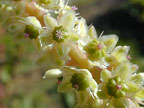
Phytolacca octandra
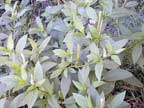
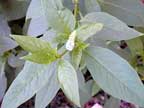
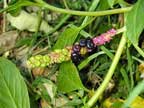
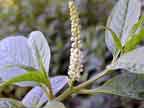
A soft woody shrub with growth varying from spreading to upright. Up to 1.5m tall. Pointed ovoid leaves, 2cm by 10cm. Small off white flowers on upright spires, ripening to purplish - black, round berries 5mm in diameter. Flowers are seen in early summer with berries ripening late summer/autumn. Dormant after first frost.
Pokeweed (P. americana or P. clavigera) is sometimes grown in gardens.
Most of the N. Island and Kaikoura and Banks Peninsulas of the South Island. Dies back in frosts, but regrows, so does better in warmer disctricts. Found in wasteland and new pasture.
Saponins are the compounds most likely to cause toxicity; they are found especially in the berries and may include the saponin like alkaloids phytolaccine, phytolaccotoxin. Oxalic acid may also be present. Inkweed is most poisonous in the autumn when the berries are ripe. Risk of toxicity is also high when the foliage is wilted (cut or sprayed) as it is not recognised by stock and is more attractive due to the breakdown of starch to sugars.
Grazing animals and poultry; poisonings reported in pigs, cattle (particularly calves) and sheep. Usually avoided by stock as it is irritant. Pokeweed poisoning in the USA usually involves pigs.
Enteritis and diarrhoea develop 1 - 2 hours after eating the plant. Animals may be found dead.
Enteritis, staining of stomach contents purple from berry juice. Nephrosis, sometimes jaundice.
Stained stomach contents and history.
Numerous causes of enteritis including viral and bacterial infection. Various causes of liver dysfunction (e.g. ragwort poisoning or spring eczema).
Gastric lavage under anaesthetic or activated charcoal and a laxative to decontaminate the animal. Fluids to replace losses in diarrhoea. An oil protectant such as liquid paraffin to coat the gastrointestinal tract, dilute acetic acid orally to combat alkaloid toxin and a blood transfusion if the animal is anaemic may be required.
Recovery good if treated, slow if not. Rarely fatal.
Conner H.E. The Poisonous Plants In New Zealand. 1992. GP Publications Ltd, Wellington
Cooper M R, Johnson A W. Poisonous Plants and Fungi in Britan: Animals and Human Poisoning. Her Majesty’s Stationary Office. London. 1998
Surveillance. Inkweed poisoning 33 (2) 27, 2006
12 October, 2007