Solanum pseudocapsicum
Christmas cherry, (Madeira) winter cherry
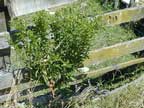
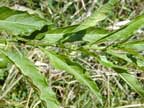
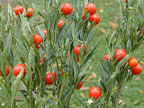
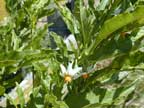
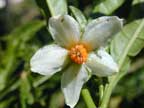
A shrub up to 1.3m tall. Leaves are dark green, shiny, waxy, oblong in shape and 10cm long. Flowers are small star shaped, with five white petals, in clusters or alone and 1.2cm wide. Fruits are globular, 1.2cm in diameter, scarlet or yellow and resemble miniature tomatoes.
S. diflorum, false Jerusalem cherry, is very similar. It is also toxic.
Occasionally plentiful in damaged forests throughout New Zealand. Also a garden plant.
The steroidal alkaloid solanocapsine. All parts are poisonous, particularly berries.
All animals. Usually ignored by livestock, no cases of animal poisoning have been reported in New Zealand. Several children have died after eating the fruit.
Irritation and direct slowing action on the heart. Nausea, abdominal pain, vomiting, diarrhoea, dryness of mouth and dilated pupils.
Hyperaemia of the alimentary tract, often with severe haemorrhage, and generalised congestion of visceral organs. Fat may be yellow (jaundice).
History, clinical signs, leaves/berries in rumen/stomach.
Toxicosis of other Solanum species. Other diseases presenting with vomiting/diarrhoea like infectious causes.
Symptomatic; gastric lavage, activated charcoal, fluid and electrolytes and anticonvulsants suggested.
Good if decontamination or profuse diarrhoea within 24hrs of ingestion aids the excretion of the toxic plant material.
Avoid grazing plants. Use weed control measures.
Conner H.E. The Poisonous Plants In New Zealand. 1992. GP Publications Ltd, Wellington
Parton K, Bruere A.N. and Chambers J.P. Veterinary Clinical Toxicology, 2nd ed. 2001. Veterinary Continuing Education Publication No. 208
4 October, 2007