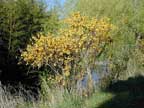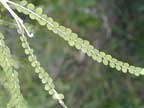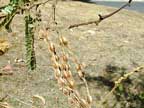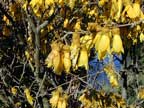
Sophora species.
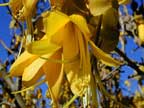
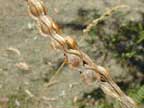
NZ native trees or shrubs, 20 1m tall. Leaves are 15cm or more in length each bearing 20-40 pair of leaflets, which are small and almost round. Flowers are ostentatious yellow in drooping racemes or panicles in spring. Pods are long, winged; seeds yellow.
Originally three species recognised S. tetraptera, S. microphylla and S. prostrata but now divided into 27 (very similar) species. Probably all toxic.
Throughout New Zealand in open forests, along forest margins, river banks and in open damp or rocky places. Commonly grown as an ornamental.
The alkaloid cytisine which acts like nicotine. It stimulates the respiratory centres, causes excitation of muscle and paralysis of peripheral sympathetic ganglia. All parts are poisonous, most poisonings are caused by seeds.
Children, livestock and bees.
Diarrhoea and abdominal pains.
Non specific lesions. Death is due to nicotinic stimulation of the nervous system.
History, clinical signs, leaves in rumen/stomach.
Other causes of diarrhoea.
Symptomatic treatment and decontamination if timely.
Relatively poor with high morbidity and moderate mortality. Animals may die from 12 hours on throughout the next ten days.
Conner H.E. The Poisonous Plants In New Zealand. 1992. GP Publications Ltd, Wellington
4 October, 2007