Clematis vitalba
traveller's joy
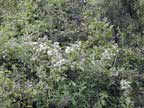
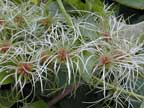
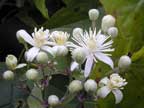
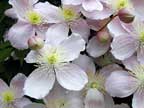
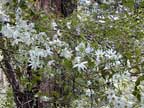
Deciduous climber with woody stems. Branches have twisted petioles which cling to other plants or objects. Leaves are opposite, pinnate, bright glassy green and oval, about 10cm long with about 5 ovate stalked segments. Flowers are small and white with distinctive feathery fruits and fragrant. The flowers are in loose panicles at the ends of axillary or terminal branches.
There are several native species, of which Cl. paniculata is common in the bush. It has showy white flowers in spring and shiny evergreen leaves. Cl. montana is common in gardens. Both are probably toxic but stock are unlikely to come across them.
Very common noxious weed, growing over hedges and trees in wasteland and roadsides. It can take over in native bush and smother other plants.
Contains the toxin protoanemonin, an irritant yellow, poisonous volatile oil. When the plant is crushed, protoanemonin is released from its precursor ranunculin. It is only present in the fresh plant. Causes acute irritation, erythema and inflammation of the mucous membranes, gastrointestinal mucosa and skin.
Principally cattle. They rarely eat the plant because of its acrid taste and irritant effect on the mouth.
Disinclination to stand, progressing to recumbency and in one case death, within 24 hours of onset of symptoms. Conjunctivitis, ulcerated muzzle, dyspnoea, abdominal pain and loss of muscle tone.
Enteritis, pulmonary oedema and generalised congestion. Patches of inflammation on the rumen wall.
Evidence of clematis in the rumen contents, intense gastroenteritis and lack of other causes.
Poisoning with other plants of the ranunculus family including buttercup and delphinium species. Other causes of gastritis, rumenitis and respiratory distress.
Treat internally and topically with dilute potassium permangenate to protect mucosal surfaces. Activated charcoal for decontamination. Give symptomatic treatment.
Good
Cut down plants and spray new growth.
Conner H.E. The Poisonous Plants In New Zealand. 1992. GP Publications Ltd, Wellington
Cooper M R, Johnson A W. Poisonous Plants and Fungi in Britan: Animals and Human Poisoning. Her Majesty’s Stationary Office. London. 1998
Parton K, Bruere A.N. and Chambers J.P. Veterinary Clinical Toxicology, 2nd ed. 2001. Veterinary Continuing Education Publication No. 208
4 October, 2007