Hedycarya arborea
Porokaiwhiri
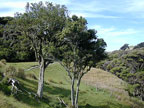
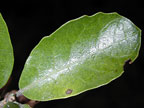
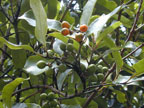
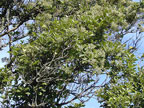
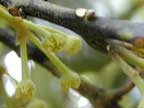
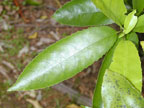
Tree up to 12m tall, with possible 50 cm trunk diameter. Bark is dark brown. Leaves are opposite, oblong and tapered. They are coarsely toothed and 5-12 cm long of a dark green colour on the topside and paler, shiny underside. Flowers are whitish to green in branching racemes. Fruits about 15 mm long, clustered as bright red or orange drupes.
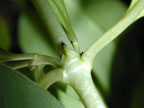
Taupato and other Coprosma species. These all have a small spicule at the leaf junctions. Whiteywood has similar leaves and flowers, but purple berries.
Locally common NZ native, within and around bush from North Cape to Banks Peninsula in the east and Milford in the west.
Kaloids (alkaloids) have been found, however, no specific mechanism has been established.
Sheep and cattle.
Sheep: dullness, anorexia and loss of weight shown experimentally. Cattle: depression and loss of appetite.
No visible changes or lesions seen in either sheep or cattle.
Evidence of plant ingestion and clinical signs.
Prevent further ingestion of the plant, decontaminate as needed and treat symptomatically.
Assuming further ingestion of the plant is prevented the prognosis is good.
Conner H.E. The Poisonous Plants In New Zealand. 1992. GP Publications Ltd, Wellington
Parton K, Bruere A.N. and Chambers J.P. Veterinary Clinical Toxicology, 2nd ed. 2001. Veterinary Continuing Education Publication No. 208
4 October, 2007