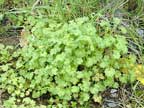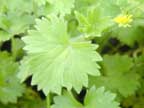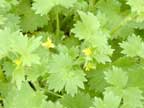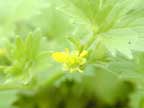
Ranunculus parviflorus
Spreading hairy annual up to 30 cm tall. Base leaves are round and heart shaped, yellow green in colour. Flowers very small and irregular. Sepals are hairy.
Other members of the buttercup family.
One of the less common buttercups. Found in waste and cultivated areas.
Ranunculin is a glycoside that forms the irritant protoanemonin which is unstable and polymerises to crystalline nontoxic anemonin. Toxicity is low as the production of protoanemonin deters most animals from ingesting sufficient amounts. Protoanemonin causes erythema and blistering of the skin. All parts of fresh plants are poisonous. Toxic levels are the highest in spring.
Mainly cattle.
In most domestic animals (cattle in particular), poisoning produces an excessive flow of saliva, soreness (sometimes with ulceration) of the mouth, and abdominal pain. In severe cases, this is followed by diarrhoea, with the passage of black faeces, and blood stained urine. Animals will become weak and stagger and show impaired hearing and sight. Some animals will die and death is preceded by severe convulsions.
Acute inflammation of the stomach and intestines. Mouth and throat lesions. Rumen contents may contain a large amount of buttercup. Renal damage is sometimes evident.
Presence of buttercup in the ingesta. Presence of severe gasteroenteritis. Exclusion of other causes. Diagnosis is difficult as an amount of buttercup is found in almost all ingesta.
Other plant poisonings especially those containing ranunculin, eg Old Mans Beard and other species of Clematis, or those containing protoanemonin, eg Anemone species. Malignant Catarrhal Fever.
Mild purgatives, demulcents. Potassium permanganate protects the skin from irritant action of Protoanemonin.
Usually good, especially in mild cases.
Use chemical or other control methods to remove buttercups or avoid overstocking pastures with livestock when large quantities of buttercup are present.
Conner H.E. The Poisonous Plants In New Zealand. 1992. GP Publications Ltd, Wellington
Cooper M R, Johnson A W. Poisonous Plants and Fungi in Britan: Animals and Human Poisoning. Her Majesty’s Stationary Office. London. 1998
Parton K, Bruere A.N. and Chambers J.P. Veterinary Clinical Toxicology, 2nd ed. 2001. Veterinary Continuing Education Publication No. 208
4 October, 2007