Solanum linnaeanum (previously S. sodomeum)
apple of Sodom, popola, Dead Sea apple
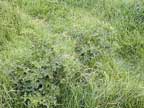
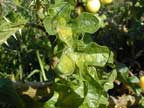
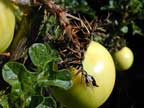
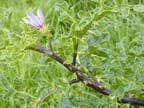
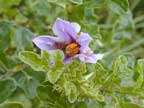
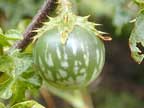
Spreading shrub up to 3 m tall with stout prickles and scattered star shaped hairs. The leaves are deeply and irregularly lobed, up to 10 cm long; lobes are nearly obovate, wavy. The flowers are violet, 20-25 mm in diameter. The fruit is a mottled green and white globular berry 25 mm in diameter, becoming yellow as it ripens.
Other Solanum species but thorns and striped unripe fruit are distinctive.
May be found in northern half of North Island, especially in sand dune areas.
Solasonine, a glycoalkaloid.
No poisoning is known to have occurred in New Zealand.
Abdominal pain, vomiting, diarrhoea and depression. Profuse diarrhoea with abdominal pain, depression, weakness and incoordination, trembling, rapid respiration and heart rate, dyspnoea, excessive salivation, nasal discharge and jaundice.
Hyperaemia of the alimentary tract, often with severe haemorrhage, and generalised congestion of visceral organs.
History, clinical signs, plant in the rumen.
Symptomatic treatment. Establish respiration, induce vomiting in the appropriate animals, activated charcoal, saline cathartic, iv fluids to maintain body fluid and electrolyte balance.
Generally depends on the severity of clinical signs and response to treatment. Fatalities are uncommon.
Conner H.E. The Poisonous Plants In New Zealand. 1992. GP Publications Ltd, Wellington
Parton K, Bruere A.N. and Chambers J.P. Veterinary Clinical Toxicology, 2nd ed. 2001. Veterinary Continuing Education Publication No. 208
4 October, 2007