Pimelea prostrata
New Zealand Daphne
Description
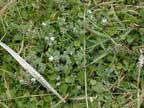
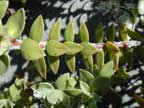
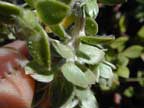
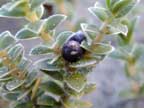
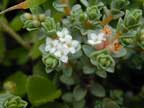
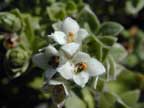
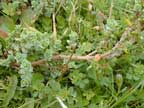
Small, prostrate, branched woody shrub up to 50cm in diameter. Pointed oval, greeny-grey leaves, 5mm long. Waxy white flowers, 3-4mm. Red or white ovoid berries.
There are several species of Hebe which look similar, but are not thought to be toxic. Some other Pimelia spp. grow in alpine areas where stock are unlikely to come across them. True Daphne is also poisonous.
Open shrublands, river terraces, coastlines and gardens in both North and South islands, up to 1500m altitude. Native to New Zealand.
Prostratin, a highly toxic dipterpene acetate found in leaves and bark. Irritant to mucous membranes and skin, causes hypersensitivities and has a strong effect on cardiovascular function. Poisonings seen throughout the year (perhaps more common in winter when feed is restricted).
Affected species
Cattle, sheep and horses.
Clinical signs
depression, loss of appetite, profuse watery diarrhoea, muscular pain, intense irritation of mucous membranes of lips, tongue and eyelids, strong disinclination to move, may have small vesicles on underside of tongue, yellow oedematous eyes and eyelids
Small ulcers and vesicles in mouth and on tongue. Mucous surfaces (including stomach) acutely inflamed and distinctly yellow. Intestines have localised injection of capillaries but fewer lesions than seen in stomach. Fatty degeneration of liver (pale yellow).
History and clinical signs, especially severe enteritis and yellow oedematous eyes.
Rhododendron or Pieris japonica poisoning, anything causing jaundice (eg. acute fasciolosis, bile duct carcinoma, facial eczema.) Allergic hypersensitivity reactions, bacterial or viral enteritis, systemic bacteraemias and viraemias including foot and mouth disease.
Average to poor. Better for sheep than cattle and horses.
Decontamination, fluid replacement and nursing.
Poisonous plants in New Zealand, by Jose Steuart, revised edition. GP Books, Wellington, 1989
Veterinary continuing Education publication number 127, Veterinary Clinical Toxicology, by AN Bruere, BS Cooper and EA Dillon, 1990.