Nicotiana tabacum and N. sylvestris
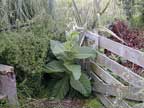
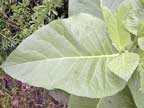
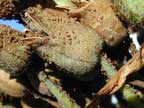
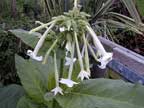
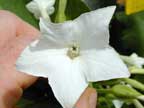
N. tabacum and N. sylvestris are tall plants up to 2 m. The leaves are large, hairy, broad, thin and fragile, usually covered with a sticky secretion with an unpleasant smell. The trumpet shaped flowers are white or pink to red in colour. Many-seeded capsules may appear in late summer.
N. sylvestris is pictured, N. tabacum (the tobacco of commerce) is very similar, but the flowers are not fragrant. N. alata and the hybrid N. x sanderae are common in gardens.
Commercial tobacco originated in South America. Perennial in Mexico, it is cultivated as an annual in commercial growing areas. This plant is not commonly found in New Zealand, except for garden escapes (although it was once grown commercially in the Hutt Valley). Its large leaves, rich in nicotine, are used, after drying, for making of cigars and cigarettes.
Nicotine. In a human unaccustomed to tobacco, 4 mg can cause clinical signs, and 60 mg at one time can cause death. nicotine's mechanism of action involves stimulation followed by inhibition of nicotinic acetylcholine receptors in the NMJ and autonomic ganglia, and later the CNS. Once absorbed, the nicotine has a saponin-like haemolytic action on red blood cells and may produce transient haemoglobinuria. The leaves are the most toxic part of the plant. Tobacco remains toxic when dried, therefore processed feeds containing tobacco are not safe. All species of Nicotiana are poisonous, but there have been no reported cases in animals in NZ.
All animals may be affected, pets in contact with tobacco products are at risk as are pigs allowed to forage on harvested tobacco fields. However, the green plants taste unpleasant and pigs will not usually eat them. Pets can easily be poisoned by tobacco products in the home, either accidentally or maliciously.
Early / mild signs are gastrointestinal. These can develop within 10 to 15 minutes or may not show for several hours. At first, the irritating effect that tobacco has on the stomach and intestines will cause salivating, vomiting (if capable), and diarrhoea.
Later / more severe signs involve stimulation followed by inhibition of nicotinic acetylcholine receptors, most obviously in the CNS and heart. Initially, nicotine stimulates the nervous system, with early signs include nervousness, shaking, trembling, a stiff and uncoordinated gait, weakness and collapse, convulsions in severe cases, followed by coma . Tachycardia and hypertension, followed by bradycardia and hypotension are seen in severe cases. Similarly, breathing difficulties, to the point of respiratory paralysis (the cause of death in lethal cases) may be seen.
Birth defects have been well documented when pregnant sows ingest tobacco. The most common defects are limb deformities in the piglets.
Hyperaemia of the alimentary tract, often with severe haemorrhage, together with a generalized congestion of the visceral organs.
Clinical signs, history and on stomach contents.
Gut irritation alone: many toxins.
Neurological signs:organophosphate poisoning (nicotine acts as a cholinesterase inhibitor), carbamate poisoning, blue green algae poisoning and hemlock poisoning.
Symptomatic. This includes gastric lavage, activated charcoal, electrolytes, fluids and anticonvulsants. Atropine may be needed for bradycardia.
Prognosis is good, provided the animal is decontaminated by either pumping the stomach or administering activated charcoal etc. However, if the animal has ingested a high dose and is not decontaminated, then death through respiratory and cardiac depression is probable if intensive care facilities are not available.
Do not allow pets to be in contact with tobacco or tobacco products. Do not let animals drink from ash trays, since this water can have extremely high concentrations of nicotine. In sows, there is disagreement over whether a "danger window" for consumption of tobacco during gestation exists (there are two possibilities, that on days 10 to 30 of gestation the piglets are susceptible, or that anything after 30 days is dangerous). Do not let pregnant sows graze on tobacco.
Conner H.E. The Poisonous Plants In New Zealand. 1992. GP Publications Ltd, Wellington
Parton K, Bruere A.N. and Chambers J.P. Veterinary Clinical Toxicology, 2nd ed. 2001. Veterinary Continuing Education Publication No. 208
9 February, 2009