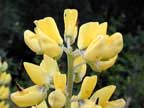
Lupinus arboreus
yellow lupin
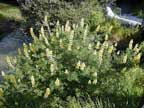
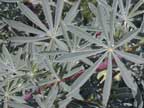
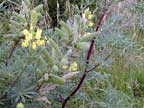
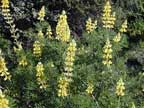
Annual herb up to 1.5 tall. Showy pea-like yellow flowers grow in long terminal spikes. Leaves digitate with 5-9 leaflets which are linear, oblong and covered in soft hairs. Fruit is flat pod constricted between the seeds. It has a very long tap root which enables the plant to withstand drought.
Blue lupin (L. angustifolius) is sometimes grown for fodder or for oil production from the seeds. Variously coloured hybrids are commonly grown in gardens.
Throughout New Zealand, preferring the sunnier, drier regions.
Dubious toxicity - no poisonings recorded in NZ. Lupanine and sparteine have been identified in the plant.
Other species. of lupins may affect sheep, also cattle, goats, donkeys, horses, pigs and deer. Most animals will avoid eating tree lupins unless desperate.
There is no evidence of poisoning in NZ; however, the toxin sparteine causes tonic convulsions, decreased respiration and depression of all motor functions.
Conner H.E. The Poisonous Plants In New Zealand. 1992. GP Publications Ltd, Wellington